how it works
Henna, start to finish
Henna is a paste ground from the leaves of a small flowering shrub. Rest it on skin for a while and it leaves a warm brown stain that fades on its own in a couple of weeks. People across South Asia, the Middle East, and North Africa have drawn with it at weddings and celebrations for thousands of years. We just packed it for a night in.
The night, step by step
warm up
Snip the very tip off a cone — less than you think — and scribble on the practice sheets for a few minutes. Lines steady up fast, promise.
pick your patterns
Flip through the design book together and call dibs — twenty patterns, easy through ambitious. Can't agree on who draws what? That's what the card game is for.
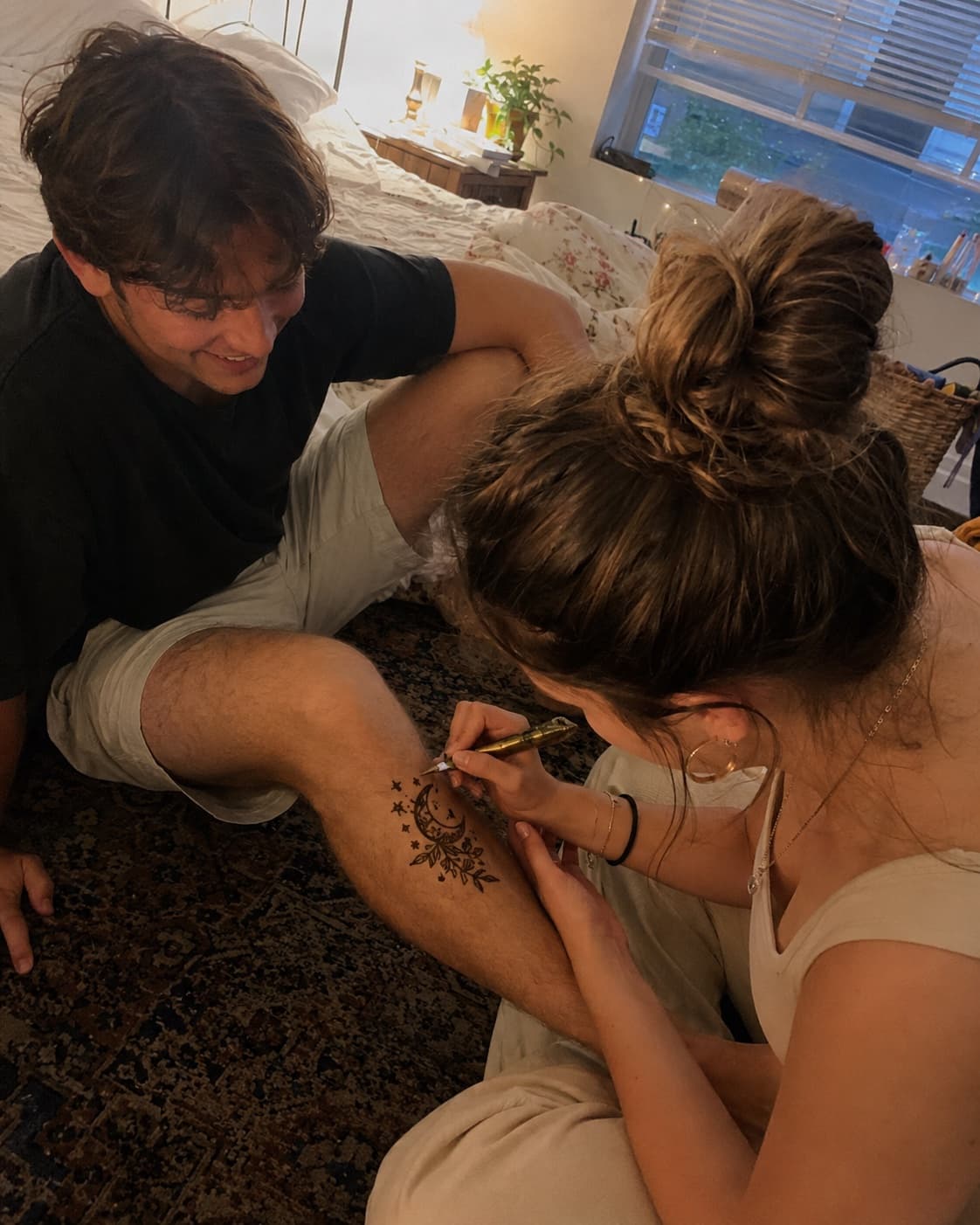
draw
Squeeze gently, like icing a cake, with your wrist resting on something steady. Go slow; wobbles read as handmade, not as mistakes.
let it dry
The paste dries to the touch in about half an hour, and the longer it sits after that, the deeper the stain — an hour or two is the sweet spot. Queue up a movie; this is the cozy part.
scrape, don't wash
Flake the dried paste off with a fingernail or the edge of a card. Keep water off the design for the rest of the day if you can — the stain is still settling in.
watch it deepen
It starts out bright orange and settles into a warm brown over the next day or two. That's the leaf dye oxidizing — normal, and honestly the fun part.
Good to know
does it hurt?
Not even a little. The paste sits cool on top of your skin and just… sits there. Nothing sharp, nothing permanent.
do we need to be good at drawing?
No. The design book runs easy to ambitious, the practice sheets are for warming up, and shaky lines come out looking handmade — which is the point.
how long does it last?
About two weeks. To stretch it: a thin coat of the aftercare oil before showers, the cotton gloves overnight on night one, and no scrubbing. It fades as your skin naturally turns over.
will it stain the couch?
Wet paste will try. Work over the practice sheets, let everything dry before you lean back, and you're fine — dried flakes sweep right up.
isn't henna sometimes black?
Real henna is orange-to-brown, always. 'Black henna' gets there with a chemical (PPD) that can burn skin — nothing like it goes in our cones. If you ever see jet-black henna, skip it.
who should sit this one out?
Anyone with a G6PD deficiency — henna is a hard no there. Keep it off little kids, and if your skin runs sensitive, draw a small test dot and give it a day first.
That's the whole of it: paste, patience, and somebody you like.
washes off in a couple of weeks